The Role of Group Therapy in Inpatient Drug Rehab
Tru Addiction Health Staff
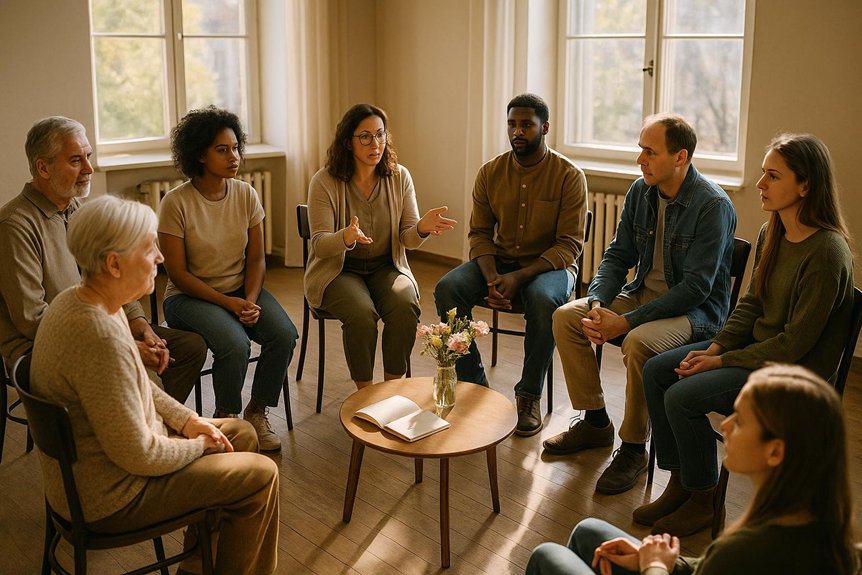
Imagine you're in a place where everyone understands your struggles, and you're not alone in your fight against addiction. Group therapy in inpatient drug rehab offers you this essential community. It’s more than just talking; it’s about connecting with others who truly get it. You’ll find yourself sharing stories, building trust, and learning resilience together. Curious about how these bonds can transform your recovery journey? Discover the empowering role of group therapy.
Why Group Therapy Matters in Rehab
While traversing the challenging journey of recovery, group therapy becomes an essential component in rehab. You’ll find that therapeutic dynamics foster emotional connections, helping you build peer bonding. This environment encourages empathy development, allowing you to see the world through diverse perspectives.
Group cohesion emerges as members work towards shared goals, promoting collective growth. In this healing environment, you’ll learn valuable conflict resolution skills that enhance your ability to navigate relationships.
Working towards shared goals fosters group cohesion and collective growth, enhancing conflict resolution and relationship skills.
The supportive nature of group therapy fosters a sense of belonging and understanding, making it easier to face challenges together. You’ll experience how these sessions are more than just meetings—they’re opportunities to grow, heal, and connect with others on a similar path.
This journey is as much about personal recovery as it's about collective healing.
Understanding the Basics of Group Therapy
In group therapy, you’ll find a space where shared healing experiences create a sense of belonging and understanding.
It’s a chance to build support networks with others who truly get what you’re going through.
Shared Healing Experiences
Group therapy in inpatient drug rehab offers a unique opportunity for shared healing experiences, fostering a sense of community and understanding.
You’ll find shared vulnerability at the heart of these sessions, where opening up leads to collective empowerment.
As you engage, mutual understanding grows through group dynamics and therapeutic alliances.
Emotional expression is encouraged, helping you connect deeply with others who share similar struggles.
Building Support Networks
Although managing recovery can feel overwhelming, building support networks through group therapy offers a foundational pillar in inpatient drug rehab.
You’ll engage in peer connections that foster shared goals and emotional bonding. These relationships are essential for mutual encouragement and collective growth.
By participating in group dynamics, you’ll experience trust building and create therapeutic alliances, forming friendship networks that evolve into lasting support systems.
- Peer connections: Develop relationships with others on a similar journey.
- Shared goals: Work towards common objectives in recovery.
- Emotional bonding: Connect deeply with peers who understand your challenges.
- Mutual encouragement: Support and motivate one another.
- Collective growth: Grow together through shared experiences and insights.
These networks provide strength and resilience, anchoring you in your recovery journey.
Encouraging Open Communication
As you build these supportive networks, open communication becomes a key component in group therapy. It’s essential to foster an environment where everyone feels safe to share.
Open dialogue is more than just talking; it’s about listening and understanding each other’s experiences. By participating actively, you allow yourself and others to express emotions freely, which can be incredibly healing.
Encouraging emotional expression helps you connect on a deeper level with your peers. You’ll find that sharing your struggles and successes creates a sense of unity and trust.
This openness not only aids your recovery but also empowers others to do the same. Remember, your voice matters, and through honest communication, you’re contributing to a collective journey towards healing and growth.
Creating a Network of Support in Rehab
Building a network of support in rehab is essential for lasting recovery. You’ll find that network dynamics play a vital role in your journey. Engaging in peer interactions helps you build emotional connections and trust, fostering a sense of collective strength.
As you work toward shared goals, support systems become more robust. Group diversity enriches your experience, offering various perspectives and collaborative strategies to overcome challenges.
Be mindful of communication barriers; overcoming these is key to effective trust building.
- Embrace diverse perspectives to enhance understanding.
- Foster trust through open and honest communication.
- Engage in collaborative activities to strengthen bonds.
- Identify shared goals to unite efforts and focus.
- Cultivate emotional connections to provide mutual support.
Your network will be a cornerstone of your recovery success.
Sharing Personal Stories and Learning
When you share your personal story in group therapy, it opens doors to healing and understanding. By engaging in emotional sharing, you allow others to see your journey, struggles, and triumphs. This vulnerability fosters a safe space where personal reflections are encouraged and valued.
As you open up, you’ll find that others resonate with your experiences, creating a sense of connection and empathy. Through personal reflections, you gain insights into your own behaviors and patterns. Others' stories become mirrors, helping you see aspects of yourself you might’ve overlooked.
This shared learning environment empowers you to grow and evolve. You’re not just telling your story; you're weaving it into a collective tapestry of healing, where every voice contributes to the journey forward.
Ready to Find Treatment? We Can Help.
Our treatment specialists can help you find the right inpatient drug or alcohol rehab program. Free, confidential, 24/7.
Get Help Today: (866) 469-0954Facing Challenges as a Group
You’ll find that shared responsibility and collaborative healing lead to joint problem solving, making challenges less intimidating. Here’s how you can benefit:
- Embrace shared vulnerabilities: Open up and connect meaningfully.
- Foster mutual accountability: Hold each other accountable with care.
- Enhance empathy development: Understand and support one another deeply.
- Encourage collective growth: Grow together, learning from each experience.
- Promote joint problem solving: Tackle challenges with combined strengths.
These elements empower you to face difficulties together, strengthening the journey to recovery.
Connecting to Reduce Isolation
Although isolation might seem inevitable in difficult times, connecting with others in group therapy offers a powerful antidote. You’ll find that isolation reduction begins with emotional connection and shared vulnerability. By opening up, you foster peer bonding and social engagement, crucial components of group dynamics.
In this safe space, collective healing takes place through mutual support and trust building. You’re not alone in your journey; others understand your struggles. This empathy development strengthens your resolve and encourages openness.
As you share experiences, you’ll notice how these interactions transform feelings of isolation into a sense of belonging. The connections you make aren’t just therapeutic—they’re essential steps toward recovery, offering a lifeline in moments of doubt and uncertainty.
Identifying Common Triggers Together
As you commence on the journey of recovery, identifying common triggers with your peers becomes an essential step. By fostering trigger awareness, you can recognize the emotional identification and behavioral patterns that lead to relapse.
Group therapy offers a safe space to explore these issues, emphasizing stress management and personal accountability. Peer dynamics encourage the sharing of experiences, enhancing understanding of relational triggers and environmental influences.
Together, you build group synergy, creating a supportive network.
- Recognize emotional responses to stressors.
- Discuss environmental influences affecting behavior.
- Identify patterns in relational triggers.
- Encourage personal accountability through sharing.
- Build group synergy by understanding peer dynamics.
Developing Effective Coping Strategies
In group therapy, you'll work together to pinpoint common triggers, building a foundation for emotional resilience.
By sharing experiences and practicing mindfulness techniques, you can develop effective coping strategies that empower you.
Identifying Triggers Together
When you're in group therapy during inpatient drug rehab, identifying triggers together can be a powerful way to develop effective coping strategies.
You'll gain trigger awareness through shared experiences and insights. Understanding emotional triggers and relational triggers is easier when you're part of a supportive group.
Group dynamics allow everyone to explore environmental and behavioral triggers in a safe space. Collaboratively, you’ll build coping mechanisms that are practical and personalized.
Consider these benefits of identifying triggers together:
- Increased trigger awareness through shared insights.
- Enhanced coping mechanisms by learning from others.
- Understanding emotional triggers with group support.
- Exploring relational triggers in a safe environment.
- Identifying behavioral and environmental triggers collectively.
Engaging in this process empowers you and fosters healing.
Building Emotional Resilience
Acknowledging triggers together sets the stage for building emotional resilience, an essential skill in developing effective coping strategies.
In group therapy, you’ll find a supportive environment where you can enhance your emotional intelligence. By sharing experiences, you’ll learn to recognize and manage emotions more effectively. This process is part of resilience training, helping you bounce back from challenges.
You’re not alone in this journey. Others are there to offer insights and encouragement, making the path to recovery a shared experience.
As you practice these skills, you’ll discover your capacity to handle stress improves considerably. Embracing emotional resilience means you’re better equipped to face life’s ups and downs, fostering long-term recovery and personal growth.
Practicing Mindfulness Techniques
While traversing the path to recovery, embracing mindfulness techniques can play a transformative role in developing effective coping strategies.
You’ll find that practicing mindfulness meditation and breath awareness helps anchor you in the present moment. Sensory grounding and mindful observation can enhance emotional regulation and stress reduction. Engaging in compassionate listening and gratitude practice fosters self-compassion and awareness cultivation.
Here are some strategies to explore:
- Mindful journaling: Reflect on your thoughts and feelings.
- Visualization exercises: Imagine calming scenes for stress relief.
- Body scan: Notice sensations and relax tension.
- Nature immersion: Connect with the environment for mindfulness.
- Mindful eating: Savor each bite with intention.
These practices support your journey by enhancing emotional resilience and fostering a deeper connection with yourself.
Improving Communication Skills
Effective communication is a cornerstone of recovery, and improving these skills in group therapy can be transformative. You'll find that role play exercises offer a safe space to practice new ways of expressing yourself.
These scenarios let you explore different perspectives, which can deepen your understanding and empathy for others. Active listening is another essential skill you'll develop. By truly hearing others, you foster a supportive environment where everyone feels valued and understood.
Group therapy encourages you to share openly and receive constructive feedback, helping you refine how you articulate thoughts and emotions.
As you enhance these skills, you'll notice improved relationships and a stronger sense of connection. Remember, you're not alone on this journey, and every step forward is a victory.
Building Accountability and Commitment
In group therapy, you'll find that building accountability and commitment starts with encouraging peer support.
By sharing experiences and listening to others, you strengthen personal responsibility and foster a sense of trust and honesty.
This supportive environment helps you stay committed to your recovery journey while knowing you're not alone.
Encouraging Peer Support
Here are some ways to encourage peer support:
- Participate in role play to explore different perspectives.
- Set shared goals with your peers to motivate each other.
- Engage in group rituals, which can strengthen bonds.
- Foster an environment of trust and openness.
- Encourage active listening to guarantee everyone feels heard.
These efforts create a supportive community on your path to recovery.
Strengthening Personal Responsibility
Building a community through peer support lays the groundwork for personal growth. In group therapy, you’ll strengthen personal responsibility by engaging in accountability practices and self-reflection exercises.
Embrace responsibility ownership to enhance your decision-making skills and develop self-awareness. This journey expands your emotional intelligence, helping you understand the impact of your choices.
Commitment strategies come into play as you actively participate in sessions, fostering proactive involvement and consequence understanding.
By sharing your experiences and listening to others, you’ll see how your actions affect your recovery and those around you. This process not only builds your confidence but also reinforces your commitment to change.
Together, you’ll create a supportive environment where everyone’s growth is intertwined with collective accountability.
Fostering Trust and Honesty
While trust and honesty may seem challenging in the early stages of recovery, they’re essential for building accountability and commitment in group therapy.
Establishing a strong therapeutic alliance helps you feel supported and understood. Engaging in trust exercises encourages vulnerability acceptance and creates emotional safety among peers.
Practicing honesty principles fosters authenticity and strengthens mutual respect. Accountability partnerships contribute to reliable feedback loops, promoting growth and learning.
- Trust exercises: Engage in activities that build connection.
- Honesty principles: Practice being truthful with yourself and others.
- Vulnerability acceptance: Embrace openness without fear of judgment.
- Conflict resolution: Address issues constructively to maintain harmony.
- Authenticity practices: Be genuine in your interactions to deepen bonds.
These elements empower you to face challenges with confidence and integrity.
How Skilled Facilitators Make a Difference
When it comes to group therapy in inpatient drug rehab, skilled facilitators play a crucial role in fostering meaningful progress. Their extensive facilitator training equips them with therapeutic techniques that enhance group dynamics and session structure.
You’ll notice how they encourage participant engagement while ensuring emotional safety. They adeptly manage conflict resolution and create an environment where everyone feels heard. By employing effective feedback mechanisms, facilitators help you reflect and grow.
Facilitators expertly foster engagement and emotional safety, guiding reflection and personal growth.
Their role modeling and empathy-building skills inspire you and others to connect on a deeper level. It’s not just about guiding discussions; it’s about nurturing an atmosphere of trust and understanding.
With such support, you’re more likely to experience breakthroughs and continue on your path to recovery.
Real-Life Success Stories in Group Therapy
Skilled facilitators set the stage for incredible transformations, and real-life success stories in group therapy highlight this impact. As you engage in these sessions, you’ll witness how group dynamics foster empathy building and shared vulnerability.
It’s powerful to see collective healing unfold as individuals develop interpersonal skills and trust. Therapeutic alliances form, allowing emotional expression to flourish.
Consider these elements of successful group therapy:
- Group dynamics: Individuals learn to navigate different personalities and perspectives.
- Empathy building: Sharing stories creates deep understanding and connection.
- Trust development: Open discussions encourage honesty and safety.
- Peer feedback: Constructive input from others fosters growth.
- Resilience training: Developing coping strategies strengthens resolve.
These components guarantee that group therapy becomes a foundation for profound change.
Achieving Long-Term Recovery Through Group Support
Therapeutic alliances emerge, grounded in empathetic listening, allowing you to feel truly heard and understood.
As accountability partners, you and your peers hold each other to your commitments, reinforcing progress.
This supportive network helps you navigate challenges, celebrating successes and learning from setbacks.
Together, you build resilience, making long-term recovery not just a possibility, but a sustainable reality.